

Introduction
In the world of forex trading, understanding the forces that move currencies is essential. Among all economic indicators, Gross Domestic Product (GDP) stands as one of the most powerful tools for measuring a country’s economic health and potential currency strength.When traders analyze GDP as a fundamental indicator of the forex market, they gain valuable insights into a nation’s growth trends, stability, and overall financial performance — all of which directly influence currency value.
In this comprehensive Millance guide, we’ll explain how GDP affects forex markets, why traders monitor it closely, and how you can use GDP data to make smarter trading decisions.
What Is GDP and Why It Matters in Forex Trading
GDP (Gross Domestic Product) represents the total monetary value of all goods and services produced within a country’s borders over a specific period.
In simple terms, GDP is the heartbeat of an economy. A strong GDP growth rate signals economic expansion and confidence, while a declining GDP indicates weakness or recession.
Why GDP Matters to Forex Traders
- It reflects economic performance — influencing investor confidence.
- It helps traders anticipate central bank actions such as interest rate hikes or cuts.
- It provides clues about currency demand — strong GDP often leads to a stronger currency.
How GDP Influences Currency Value
When GDP grows steadily, investors gain confidence in that country’s economy. As a result:
✅ Foreign investment increases → demand for that currency rises.
✅ Central banks may raise interest rates → attracting global capital inflow.
✅ Currency strengthens → leading to profitable forex trading opportunities.
On the other hand, when GDP falls:
❌ Investor confidence declines.
❌ Interest rates may be cut to boost growth.
❌ Currency weakens.
Understanding these dynamics allows forex traders to predict market sentiment and position their trades accordingly.
Components of GDP You Should Know
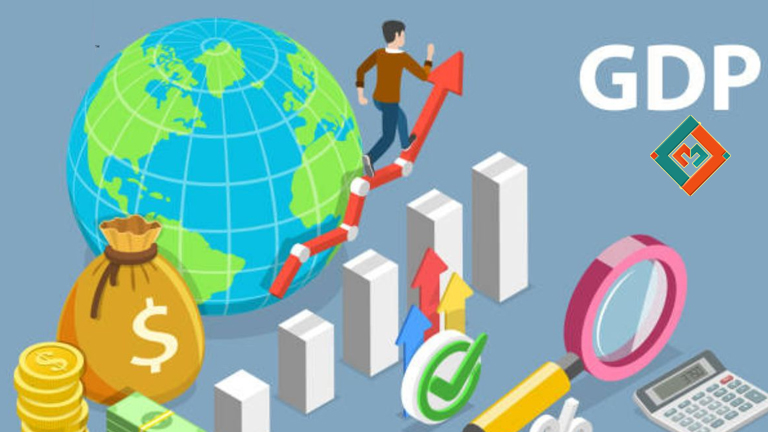
Traders should understand what makes up a country’s GDP to analyze its trends effectively. GDP consists of:
- Consumer Spending (C): The largest component, showing household demand.
- Investment (I): Business spending on assets and infrastructure.
- Government Expenditure (G): Spending on public projects and services.
- Net Exports (X – M): Exports minus imports — showing trade balance.
Formula:
GDP = C + I + G + (X – M)
When consumer spending and exports increase, GDP rises — a sign of a healthy economy that strengthens the national currency.
How GDP Data Affects Forex Market Movements
Traders and investors closely monitor GDP reports because they influence market sentiment and central bank policy.
Here’s how GDP announcements typically affect currencies:
- Higher-than-expected GDP: Boosts the currency as it signals strong economic growth.
- Lower-than-expected GDP: Weakens the currency as it suggests economic slowdown.
- Steady GDP: Creates stability and predictable trading patterns.
Example:
If the U.S. GDP report shows strong growth, traders often buy USD pairs, anticipating further appreciation.
Using GDP Data in Fundamental Forex Analysis
GDP is a cornerstone of fundamental analysis. Successful traders use it to forecast future price movements.
Here’s how to integrate GDP data into your forex trading:
- Monitor GDP release schedules from economic calendars.
- Compare current data with previous quarters to identify trends.
- Assess central bank reactions to GDP changes (e.g., rate hikes or cuts).
- Trade based on economic divergence — when one country’s GDP grows faster than another’s, its currency often outperforms.
GDP vs. Other Fundamental Indicators
While GDP is critical, it’s most powerful when combined with other indicators such as:
- Inflation (CPI): Measures price stability.
- Employment Rate: Shows labor market strength.
- Interest Rates: Directly impact currency demand.
- Trade Balance: Reflects competitiveness of exports.
Together, these indicators provide a complete picture of a country’s economic condition — enabling smarter, data-driven forex trades.
How Traders at Millance Use GDP for Success
At Millance, traders gain access to real-time economic data, GDP releases, and professional analysis tools that help them interpret these fundamentals accurately.
Millance’s platform provides:
- Live GDP reports and market calendars
- Economic analysis dashboards for quick decision-making
- Advanced charting tools for technical confirmation
With this information, Millance traders can identify profitable opportunities and adjust strategies before major GDP-related market movements occur.
Practical Example: Trading Based on GDP Data
Imagine the Eurozone releases GDP data showing a 0.8% increase — higher than analysts’ expectations of 0.4%.
Likely Outcome:
- EUR gains strength.
- Traders buy EUR/USD, anticipating bullish momentum.
- Short-term traders may use this volatility for quick profits, while long-term investors hold positions based on the improving economic outlook.
Pro Tips for Using GDP in Forex Trading
✅ 1. Watch for Revisions: GDP data often gets revised later — stay updated.
✅ 2. Compare Across Regions: Relative GDP growth (e.g., U.S. vs. EU) helps identify strong vs. weak currencies.
✅ 3. Combine Technical + Fundamental Analysis: Confirm GDP-based setups with chart signals.
✅ 4. Avoid Overreacting to One Report: Always analyze GDP trends over time.
Common Mistakes to Avoid When Using GDP Data
🚫 Trading immediately after GDP release without confirming direction
🚫 Ignoring revisions that can change market sentiment
🚫 Overleveraging on one economic event
🚫 Forgetting to combine GDP with other key indicators
Why GDP Is the Cornerstone of Forex Fundamentals
GDP doesn’t just measure growth — it tells the story of an economy’s strength, stability, and potential. For traders, it’s a leading indicator that influences interest rates, investment flows, and long-term currency trends.
By mastering GDP analysis, traders gain the ability to forecast trends ahead of the crowd — a crucial advantage in today’s competitive forex market.
Conclusion
In forex trading, success depends on understanding the fundamentals that move markets — and GDP stands at the top of that list.
As a trader, when you analyze GDP as a fundamental indicator of the forex market, you unlock insights that can help you predict central bank policies, measure economic strength, and identify high-probability trading opportunities.
Trade smarter, not harder — and let Millance’s advanced analytics guide your journey toward consistent forex success.





Leave a Reply