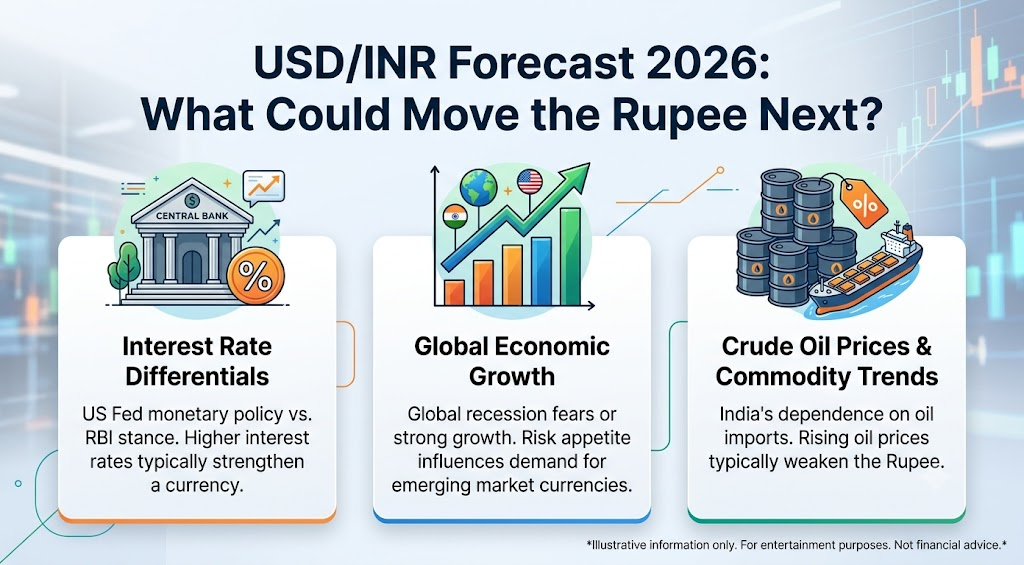

Introduction: Why Forex Trading Is Booming Right Now
Most people first hear about Forex trading through flashy Instagram reels, YouTube ads, or someone claiming they made quick money from their phone. Naturally, it sounds exciting—who wouldn’t want to earn from global currency movements sitting at home? However, once you look beyond the hype, the reality feels very different.
Forex is not a shortcut to wealth. Instead, it’s a highly competitive financial market where experienced institutions, banks, and algorithms dominate most of the activity. That’s exactly why beginners often struggle in the beginning—they enter with expectations shaped by marketing, not by how the market actually works.
At the same time, the scale of Forex is massive. With daily trading volumes crossing $7.5 trillion in 2025, it stands as the largest financial market in the world. Because of that size, opportunities do exist—but so do risks that can wipe out accounts faster than most people expect.
That’s why before placing your first trade, it’s important to understand one simple truth: Forex rewards preparation, not excitement. The more clearly you understand how it works—and where people usually go wrong—the better your chances of staying in the game long enough to actually succeed.
So, in this detailed, user-focused guide, you will learn:
- How Forex trading works step by step
- The real risks most traders ignore
- Proven strategies backed by algorithmic logic
- SEO-driven insights aligned with current market behavior
What Is Forex Trading? (Simple Explanation for Beginners)
Forex trading, also known as foreign exchange trading, involves buying one currency while simultaneously selling another. In other words, you are trading currency pairs such as EUR/USD, GBP/JPY, or USD/INR.
How It Works in Real Terms
For instance, if you believe the Euro will strengthen against the US Dollar, you buy EUR/USD. Conversely, if you expect it to fall, you sell the pair.
Therefore, your profit or loss depends on:
- Price movement
- Trade size (lot size)
- Leverage used
Why Forex Is So Popular
Firstly, Forex operates 24 hours a day, five days a week.
Secondly, it offers high liquidity, meaning trades execute quickly.
Thirdly, brokers provide leverage, allowing traders to control large positions with small capital.
However, while these advantages seem attractive, they also increase risk significantly.
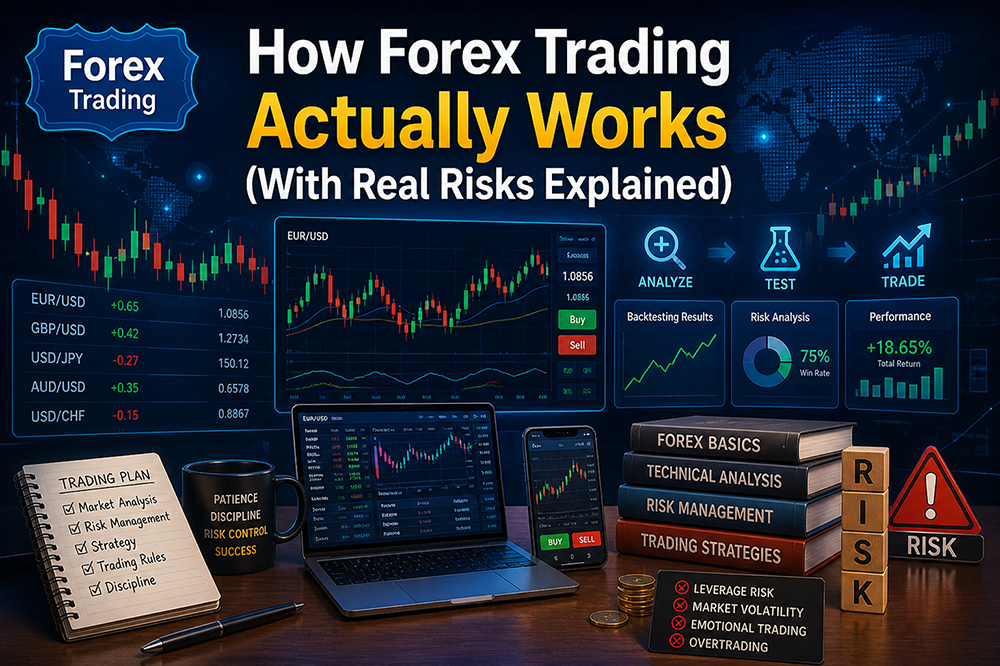
How Forex Trading Actually Works (Step-by-Step Process)
1. Choosing a Broker
To begin with, traders must select a Forex broker. The broker acts as an intermediary between you and the currency market.
However, not all brokers are trustworthy. Therefore, always check:
- Regulation status
- Spreads and commissions
- Execution speed
- Withdrawal policies
2. Opening a Trading Account
Next, you open an account and deposit funds. Most brokers offer:
- Demo accounts (risk-free practice)
- Live accounts (real trading)
Consequently, beginners should always start with a demo account.
3. Understanding Currency Pairs
Forex pairs are categorized into:
- Major pairs (high liquidity, low spreads)
- Minor pairs (moderate volatility)
- Exotic pairs (high risk, high spread)
Therefore, beginners should focus on major pairs like EUR/USD.
4. Placing Trades
After analysis, you place a trade:
- Buy (long position)
- Sell (short position)
Additionally, traders use tools like:
- Stop-loss (to limit losses)
- Take-profit (to secure gains)
5. Monitoring and Closing Trades
Finally, you monitor your trade and close it manually or automatically.
However, emotional decisions often lead to losses. Therefore, disciplined execution is critical.
Real Risks in Forex Trading (Most People Ignore These)
1. Leverage Risk (The Biggest Trap)
Leverage allows traders to control large positions with small capital. For example, 1:100 leverage means you can trade $10,000 with just $100.
However, while leverage increases profits, it also multiplies losses.
Real Example
If the market moves against you by just 1%, you could lose your entire capital.
Therefore, professional traders use low leverage (1:5 or 1:10).
2. Market Volatility
Forex markets react instantly to:
- Economic news
- Interest rate changes
- Geopolitical events
Consequently, sudden price spikes can wipe out accounts within seconds.
Example
Unexpected inflation data can cause currency swings of 100+ pips instantly.
3. Emotional Trading
Many traders fail not because of strategy, but because of emotions.
Common mistakes include:
- Overtrading
- Revenge trading
- Fear-based exits
Therefore, discipline and psychology play a crucial role in success.
4. Broker Manipulation Risks
Although regulated brokers are generally safe, unregulated brokers may:
- Manipulate spreads
- Delay executions
- Block withdrawals
Therefore, always choose regulated platforms.
5. Lack of Risk Management
Without proper risk management:
- One bad trade can destroy your account
- Consistency becomes impossible
Therefore, experts recommend risking only 1–2% per trade.
Forex Trading Strategies That Actually Work (With Logic)
1. Trend Following Strategy
Firstly, traders identify the market trend:
- Uptrend → Buy
- Downtrend → Sell
Why It Works
Markets tend to move in trends due to institutional activity.
Therefore, following the trend increases probability of success.
2. Breakout Strategy
Secondly, traders look for price breakouts from key levels.
Example
When price breaks resistance, it often continues upward.
However, false breakouts are common. Therefore, confirmation is essential.
3. Scalping Strategy
Scalping involves making multiple small trades within minutes.
Advantages
- Quick profits
- Less exposure to market risk
Disadvantages
- Requires high focus
- Transaction costs are higher
AI-Based Forex Trading Algorithm (Modern Approach)
In recent years, AI-driven trading systems have transformed Forex trading.
How AI Improves Trading
AI algorithms analyze:
- Historical price data
- Market patterns
- News sentiment
Therefore, they can predict probability-based outcomes.
Example of a Simple AI Trading Logic
- Identify trend using moving averages
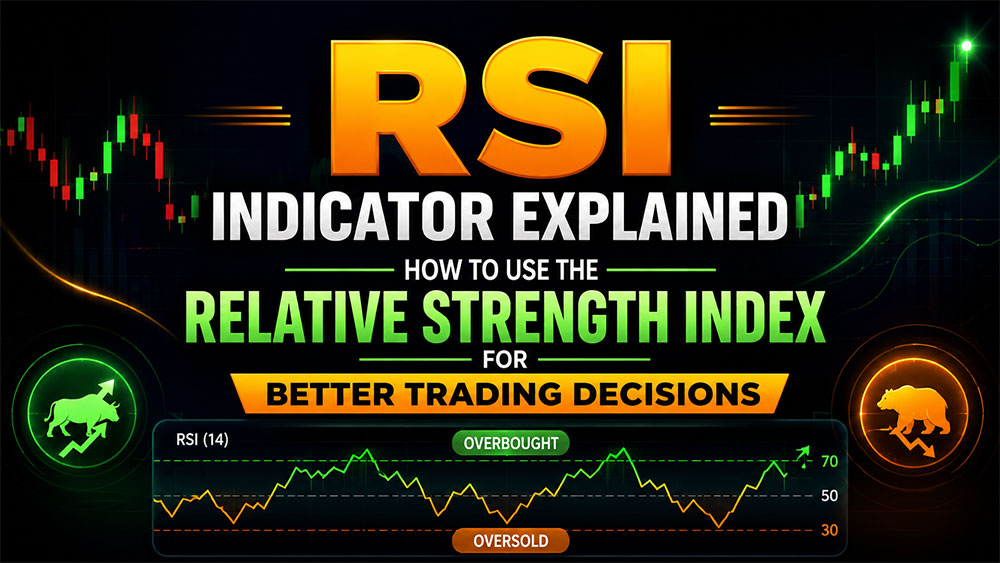
- Confirm momentum using RSI
- Enter trade only when both align
- Exit based on predefined risk-reward ratio
Why This Works
Because it removes emotional bias and relies on data-driven decisions.
SEO-Based Trading Insights (Market Behavior Analysis)
Modern Forex strategies align with data analytics similar to SEO algorithms.
Key Factors
- Volume analysis (like search traffic)
- Trend strength (like keyword ranking)
- Market sentiment (like user intent)
Therefore, traders who use data-driven insights perform better.
Latest Forex Market Trends (2025–2026)
1. Increased Retail Participation
More individuals are entering Forex due to:
- Mobile trading apps
- Social media influence
However, most beginners lose money due to lack of education.
2. Rise of Algorithmic Trading
Currently, over 70% of trades are algorithm-driven.
Therefore, manual traders must adapt to data-driven strategies.
3. Volatility Due to Global Events
Ongoing economic uncertainty continues to create:
- High volatility
- Short-term trading opportunities
However, it also increases risk.
Risk Management Strategy (Essential for Survival)
1. Use Stop-Loss Always
Never trade without a stop-loss.
2. Follow Risk-Reward Ratio
Maintain at least 1:2 ratio.
3. Avoid Overtrading
Quality trades matter more than quantity.
4. Keep Emotions in Check
Stick to your plan regardless of outcomes.
Common Mistakes Beginners Must Avoid
- Trading without a plan
- Using high leverage
- Ignoring risk management
- Following fake “gurus”
- Expecting quick profits
Therefore, patience and discipline are key.
How Companies Are Using Forex Strategies Today
Many companies use Forex trading for:
- Hedging currency risk
- Managing international transactions
- Protecting profit margins
Example
An import-export business hedges against currency fluctuations to avoid losses.
Therefore, Forex is not just speculation—it’s also a business tool.
How to Start Forex Trading Safely (Step-by-Step Guide)
- Learn basic concepts
- Practice with a demo account
- Choose a regulated broker
- Start with small capital
- Use strict risk management
- Track and analyze performance
Conclusion: Is Forex Trading Worth It?
Forex trading can be profitable, but it is not easy money.
Therefore:
- If you treat it like a business, you can succeed
- If you treat it like gambling, you will likely lose
Ultimately, success depends on:
- Knowledge
- Discipline
- Risk management
Final Thoughts (Human Insight)
Right now, many traders are struggling due to misinformation and unrealistic expectations. However, by focusing on real strategies, understanding risks, and using data-driven approaches, you can avoid common pitfalls.
So, instead of chasing quick profits, focus on building long-term consistency.
Because in Forex, survival comes first—profits come later.
SEO Keywords Used Naturally:
Forex trading, how forex works, forex risks, forex trading strategies, forex beginner guide, forex market analysis, AI forex trading, currency trading explained, forex risk management
If you want, I can also:
- Turn this into a high-ranking blog website layout
- Add internal linking strategy
- Create a monetization plan (ads + affiliate)
- Optimize for Google Discover
Just tell me 👍